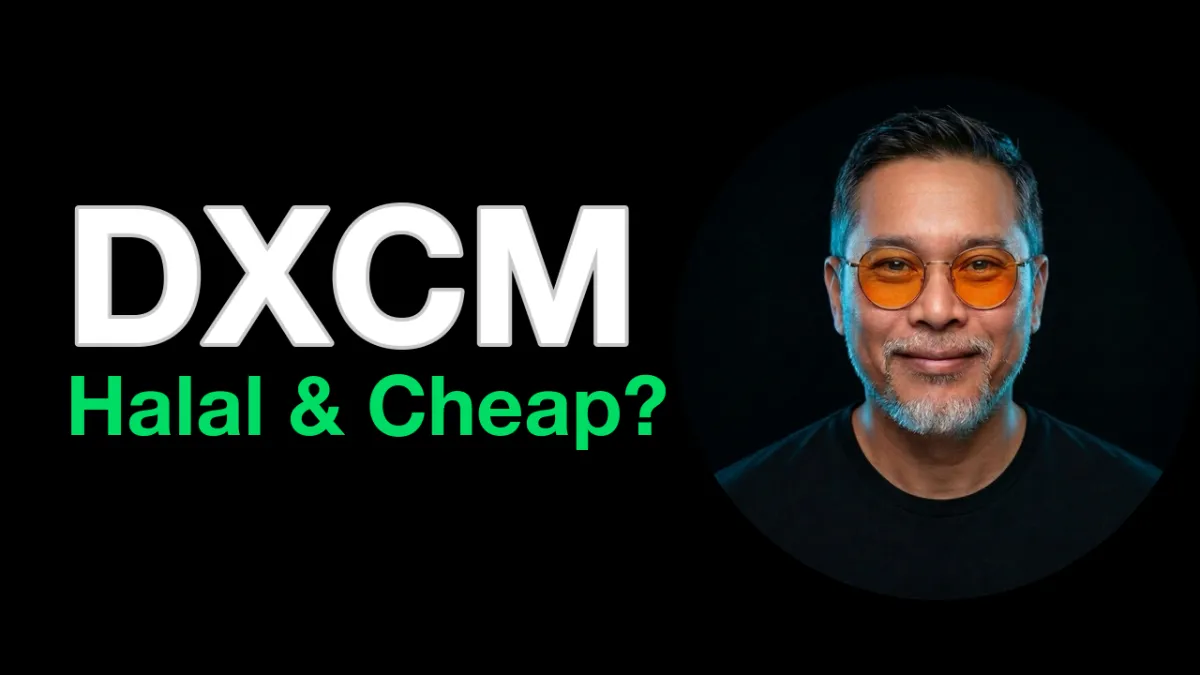
Is DexCom (DXCM) Halal — and Is the Market Underpricing a Wide-Moat Business?
Medical device makers rarely make headlines the way tech or energy names do, which is partly why a business like DexCom can drift out of the spotlight even as it keeps compounding quietly in the background. For a halal investor, that kind of quiet compounder is often more interesting than the noisy ones. But before getting to price, the first filter always has to be permissibility.
Question 1: Is it halal?
DexCom makes continuous glucose monitoring systems — devices that help people with diabetes track blood sugar in real time. That's a straightforward, permissible product line: no alcohol, no gambling, no interest-based lending at the core of the business model. It's a medical technology company solving a real health problem, which is about as clean a business activity as you'll find on a screener.
DXCM currently sits on Musaffa's Shariah-compliant list, which covers both the business activity test and the financial ratio tests (debt, interest-bearing cash, and receivables relative to market cap). That's a helpful starting point, but compliance status can shift as balance sheets and share prices move. Before allocating any capital, run the ratios yourself or confirm the latest screen — don't treat a list as a permanent stamp.
Question 2: Is it worth owning at this price?
Assuming the halal screen holds, the next question is whether the price makes sense. At $89.88, DXCM trades meaningfully below its estimated fair-value band of $111 to $143 — roughly 41% under the midpoint. On that basis alone, the stock looks like it's being offered at a discount to what the underlying business is arguably worth.
The quality picture explains why that business might deserve a premium in the first place. Financial Strength scores 92 — DexCom holds more cash than debt, which is a resilient position for a company operating in a capital-intensive, R&D-heavy industry. Profitability scores a perfect 100: for every dollar of sales, roughly 20 cents drops to the bottom line, and the company earns about 38% on shareholders' equity. Moat scores 95, backed by a 63% gross margin — the kind of steady, high margin that suggests DexCom has built something rivals can't easily replicate, whether that's regulatory approval, patents, or entrenched relationships with patients and physicians. Predictability sits at 90, meaning revenue and profits have grown in a fairly straight line over six years rather than lurching around. Growth is solid too, with sales up about 19% annually and profits growing 11% a year.
Here's the tension worth sitting with: the Valuation score itself comes in at just 41, flagged as "fully priced" on a trailing earnings basis — the stock trades near 35 times earnings, which leaves little room for error if growth slows. That sits awkwardly next to the fair-value band suggesting the shares are cheap relative to intrinsic worth. Both things can be true at once — a stock can look statistically cheap against a discounted cash flow estimate while still carrying a rich earnings multiple that assumes a lot of future growth is delivered on schedule. That's not a contradiction to wave away; it's a reason to dig into the assumptions behind the fair-value estimate before drawing conclusions.
The takeaway
A halal investor needs two "yes" answers, not one. A permissible business with weak financials is easy to avoid. Harder to resist is a permissible business with genuinely excellent quality metrics — strong balance sheet, wide moat, high profitability — trading at a price that still demands scrutiny. DexCom's numbers on financial strength, moat, and profitability are about as good as they come. But "great business" and "great price" are separate judgments, and the second one here comes with real caveats. Compliant and high-quality is a good starting point. It isn't a substitute for doing your own valuation work.
I ran DexCom, Inc. through the Barakah Stock Check app - the halal screen, quality scores and fair-value band above come straight from it. Run any ticker in seconds: barakahprofits.com/stock-check (3 days free). And in the Barakah Watch group we flag halal, wide-moat businesses trading below fair value every day.
Educational only, not financial advice. The halal screen is an automated estimate - confirm with a scholar-reviewed screener before investing. Figures are point-in-time and change.